
Façade Consultant: Buro Happold
Client: The Whiteley
Architect: Foster + Partners
Façade Contractors:
Propak Architectural Glazing, West Leigh, PAYE, Swanton, Gascoyne & Beever, Seele, Expanded Structure & Explore Manufacturing, Vision Architectural Glazing, Locker & Riley, Lyons & Anoot, AA Facades
Reimagining Heritage: The Façade Transformation of The Whiteley
In the heart of Bayswater, The Whiteley now stands as a landmark example of how heritage buildings can be reinterpreted through careful refurbishment and contemporary engineering.
Originally designed by Belcher and Joass and opened in 1911, the project builds on the logic and intent of the original scheme by creating a diverse retail and leisure experience that facades out towards the street, activating the public realm. The project optimises the massing and programme of the new building, introducing residential apartments on the upper floors and a new public courtyard on the ground that draws people into the building from adjacent Queensway.
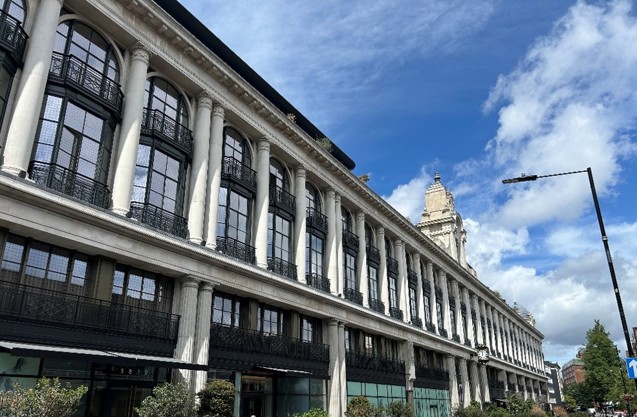
Image: The Whiteley, East Elevation Facade
Respecting the historic fabric, the scheme restores the Queensway façade to its former glory, with a new retail arcade and glazing infills on the upper floors to match the original. The re-modelled northern cupola, reinstated central dome, clocktower, along with relocation of the original entrance screen and statues, reinforce the building’s architectural significance.
Key challenges from a façade engineering perspective were meeting current building regulations with regards to fire and thermal performance, whilst resolving movement issues between the heritage structure and the additional new structure added to increase area.
Balancing Authenticity and Performance
A key aspect of the design praised for setting a new precedent for high-quality heritage refurbishment was the re-use of the original cast iron stanchions and fascias (as well as other small components), with high performance frames and glazing (mimicking the original sight lines).
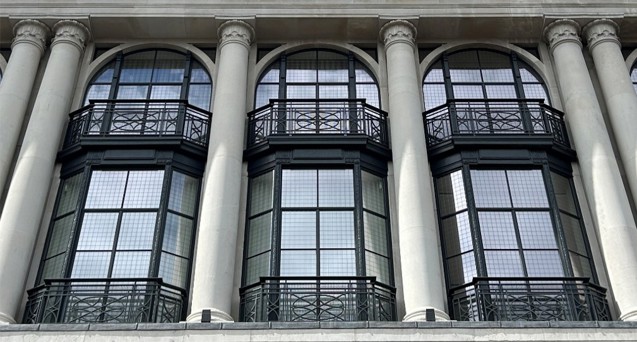
Image: The Whiteley, East Elevation Facade
While refurbishment often leads to compromises between authenticity and performance, this scheme demonstrates how both can be achieved simultaneously. There are still examples of repaired windows left in the building for heritage context, which are almost impossible to distinguish.
A Methodical Approach to Conservation
To protect the heritage fabric of the cupola, entrance screen, dome and clock tower, and to enhance their performance and enable them to be retained and further enhanced, an early methodology for survey, cataloguing, deconstruction, off-site storage, repair, and reinstallation was developed. This process was underpinned by a strong and robust quality assurance strategy, providing confidence in the temporary deconstruction and relocation of these large heritage features.
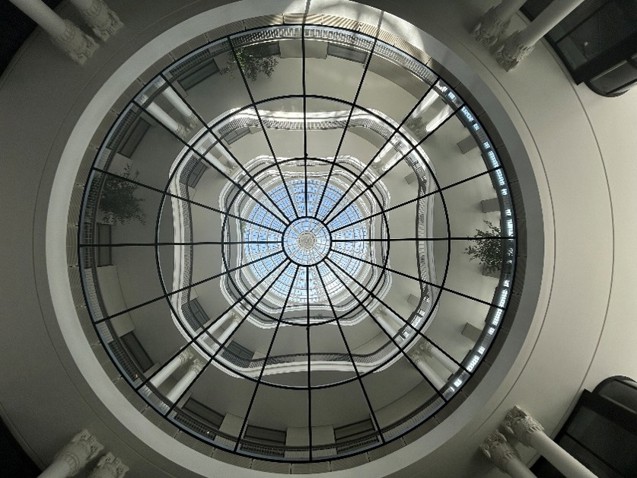
Image: The Whiteley, Dome viewed through Rooflight
The heritage glazing solution re-using original cast iron components was possible because of the rigorous testing and sequencing including:
• Detailed surveys including 100% cataloguing of all window components, including dimensions, materiality and condition. The output of the surveys also enabled an understanding of which components were original.
• Laboratory testing of materials to understand best approximation of colour, and potential presence of hazardous materials (e.g. lead paint) which could influence safety of site repairs.
• Opening-up investigations to understand interface details and how these could be improved to increase the overall envelope performance.
• Work with artisans to understand the potential quality of repairs.
• Research of sightlines and performance of available thermally broken steel systems.
• Mock-ups incorporating original fabric to achieve sightlines of the original.
• Development of methodologies and specifications for the careful removal, cataloguing, transport, and storage of components to re-use. This included monitoring regimes for components stored for long periods to ensure the fabric was well kept.
Sustainability is embedded within the project through a strong emphasis on material efficiency, local sourcing and circularity, and durability. By prioritising retention and reuse, the project significantly reduced the need for new materials while preserving the embodied carbon of the existing structure. The use of local supply chains and skilled craftsmanship further supported this approach, contributing to both environmental performance and the preservation of traditional construction techniques.
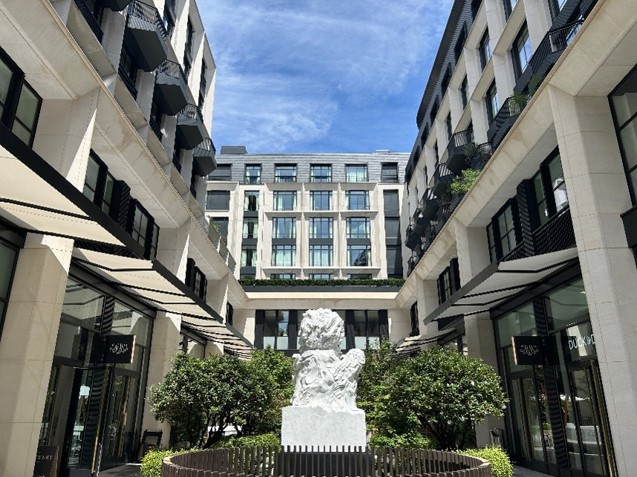
Image: The Whiteley, Central Courtyard
A Model for Conservation-Led Design
The Whiteley demonstrates the potential of façade engineering to drive the reinvention of historic buildings. By combining rigorous conservation methodologies with advanced technical solutions, the project shows that complex historic façades can be adapted to meet contemporary demands without losing their identity.