
CIBSE recently welcomed industry professionals to its London headquarters for a Breakfast Briefing held in association with Rinnai, bringing together experts from across the building engineering sector to explore the practical performance of heat pump systems and the challenges associated with delivering low-carbon heating at scale.
The session focused on the real-world delivery of heat pump installations that perform as intended in operation, supporting the industry’s ongoing transition towards more sustainable heating solutions. Discussions highlighted the importance of accurate performance assessment and system design in ensuring that heat pumps deliver expected efficiencies across varying operating conditions.
CIBSE Breakfast Briefings are sponsor-led knowledge-sharing events designed to bring together senior professionals and potential clients for focused technical dialogue. The sessions provide an accessible format for industry leaders to exchange insights on key challenges shaping the built environment, typically held at the start of the working day.
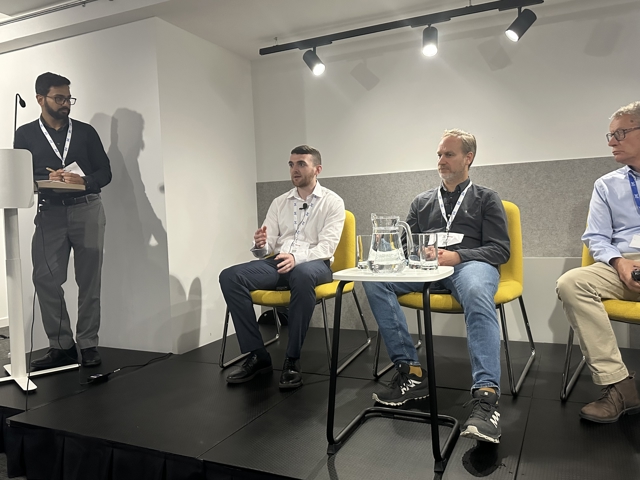
Rinnai served as sole sponsor of the briefing, with the agenda and technical content developed in collaboration with the company.
The event was chaired by Dr Jaydeep Bhadra, Domestic Sector Technical Manager at CIBSE and featured presentations from leading industry experts, including:
- Rich Cartwright, Founder and CTO, Heat Engineer Software Ltd
- Sean Ehlen, Technical Design Engineer, Rinnai
- Colin Goodwin, Technical Consultant, CIBSE
A key theme of the briefing was the importance of Seasonal Performance Factor (SPF) as a more representative measure of heat pump efficiency over an entire heating season. Unlike COP (Coefficient of Performance) or SCOP (Seasonal Coefficient of Performance), SPF accounts for variations in temperature and system behaviour over time, providing a more holistic view of operational performance.
Presentations explored how SPF can be applied in practice, including its relevance to domestic hot water systems, and how system design decisions can significantly influence overall performance outcomes.
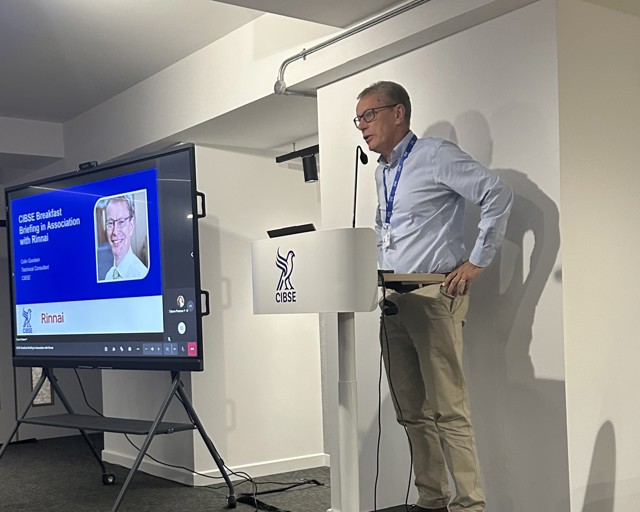
Sean Ehlen delivered a CPD session titled Analysing the Seasonal Performance Factor of Heat Pump Systems for commercial DHW and heating applications, which examined how SPF can be used to better understand and evaluate system performance in real-world conditions.
Rich Cartwright presented How Domestic Heat Loss Calculations Influence Emitter Sizing, Flow Temperature and Seasonal Performance, highlighting how design heat loss calculations inform emitter sizing, flow temperature selection and ultimately impact heat pump efficiency. His session also compared alternative design approaches and their implications for system performance.
Colin Goodwin provided an update on current CIBSE guidance, reinforcing the Institution’s ongoing work in supporting best practice in low-carbon heating design and system optimisation.
The Breakfast Briefing highlighted the importance of collaboration between industry, manufacturers and professional bodies in advancing knowledge and improving the real-world performance of heat pump systems as the sector continues its transition towards net zero.
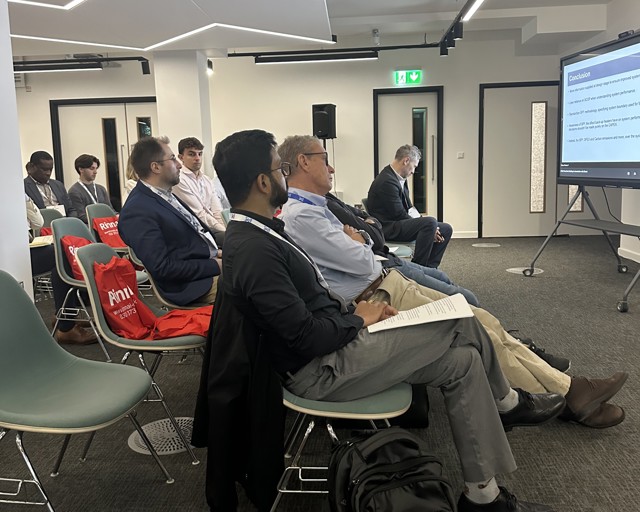
CIBSE would like to thank Rinnai for its support of the Breakfast Briefing and all speakers and attendees for contributing to an engaging and informative discussion.
As the industry continues its transition towards net zero, events such as these play an important role in sharing knowledge, promoting best practice and helping ensure that heat pump systems deliver the performance needed to support a more sustainable built environment.