The CIBSE Technical Symposium 2026, held at Loughborough University on 26–27 March, brought together leading voices from across industry, academia and policy to examine how the built environment must evolve to meet the challenges of the future.
Under the theme “Fit for 2050 – Redesigning Spaces for Wellbeing, Inclusivity, and Sustainable Performance”, the two-day event provided a dynamic platform for sharing cutting-edge research, practical insights and bold ideas that will shape the next generation of building services engineering.
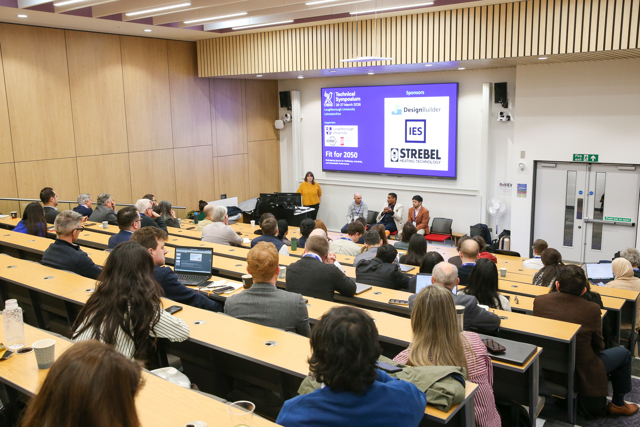
A strong opening: bridging science, policy and practice
The Symposium opened with a keynote by Professor Catherine Noakes from University of Leeds, who highlighted the critical importance of integrating scientific research, policy development and real-world practice to deliver healthier, more resilient buildings. Her address set the tone for a programme that consistently emphasised evidence-based design and interdisciplinary collaboration.
Across both days, a central message emerged: achieving buildings that are truly “fit for 2050” will require a fundamental shift from compliance-driven approaches to performance-led, people-focused outcomes.
Designing for health, wellbeing and inclusivity
A major focus throughout the Symposium was the relationship between buildings and human health. Sessions explored indoor air quality, ventilation strategies and the mitigation of airborne infection risks, reflecting lessons learned in recent years and the growing importance of healthy indoor environments.
Discussions extended beyond physical health to consider cognitive performance, circadian lighting, and inclusive design. Presentations examined how buildings can actively support wellbeing in diverse settings - from schools and workplaces to healthcare and residential environments - while balancing energy and carbon considerations.
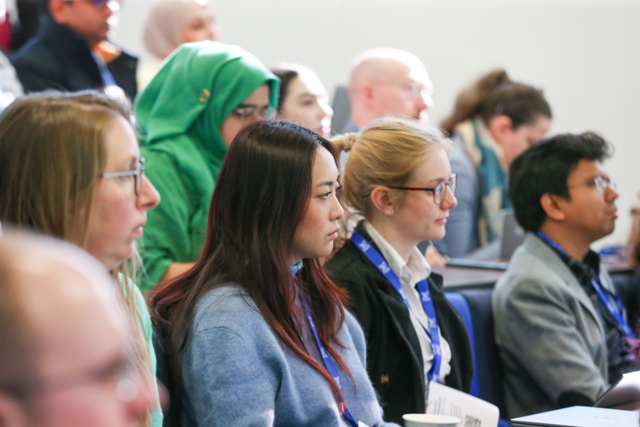
Tackling overheating and climate resilience
With rising global temperatures, overheating and climate resilience were key themes. Researchers and practitioners presented new approaches to modelling overheating risk, validating mitigation strategies and understanding the health impacts of extreme heat.
Sessions highlighted both high-tech and low-tech interventions, demonstrating that solutions must be adaptable, context-specific and accessible. The importance of future weather data, robust modelling and real-world testing was repeatedly emphasised as the industry prepares for a hotter, more unpredictable climate.

Closing the performance gap
A recurring challenge addressed throughout the Symposium was the gap between predicted and actual building performance. Multiple sessions focused on measured energy use, benchmarking methodologies and the limitations of compliance modelling.
Speakers explored how digital tools—such as building performance simulation, digital twins and data analytics—can help bridge this gap. The integration of real-world data into design and operation was identified as essential to delivering buildings that perform as intended over their lifecycle.
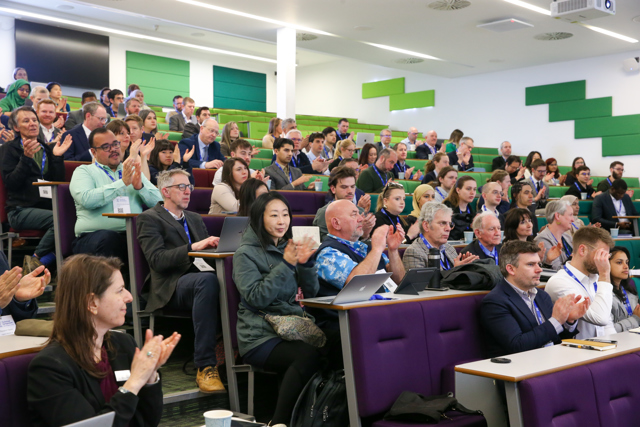
Retrofit, circularity and net zero pathways
Retrofitting existing buildings emerged as a critical priority in the transition to net zero. Sessions examined the technical, social and cultural dimensions of retrofit, including work in historic buildings, social housing and public estates.
The concept of circularity also featured strongly, with discussions on material reuse, design for disassembly and the role of digital construction in enabling more sustainable building systems. These conversations reinforced the need to rethink not only how buildings operate, but how they are designed, constructed and reused.
Heat networks, heat pumps and low-carbon systems
Energy systems were another key area of focus, with sessions dedicated to heat networks, heat pumps and low-carbon technologies. Presentations addressed system design, resilience, performance monitoring and real-world implementation challenges.
Speakers highlighted the importance of reliable standards, better data and improved system integration to ensure that low-carbon technologies deliver on their potential in practice.
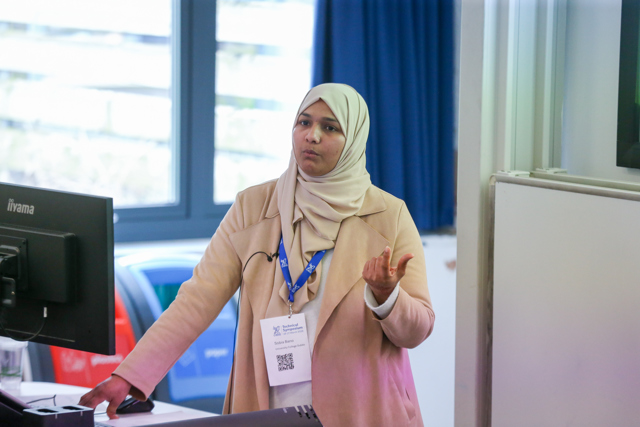
The role of AI, data and digital innovation
Artificial intelligence and machine learning featured prominently, particularly in sessions exploring building simulation, lifecycle carbon assessment and control strategies. These technologies are increasingly being used to optimise performance, enable predictive maintenance and support smarter decision-making.
This theme culminated in a thought-provoking panel discussion on the future role of engineers in an AI-driven world. The session explored whether building services engineers are being replaced, repositioned or reinvented—concluding that human expertise remains essential, but must evolve alongside rapidly advancing technologies.

A next-generation perspective
Day two opened with an inspiring address from Hannah Gray - 2025 CIBSE ASHRAE Graduate of the Year Winner, who offered a fresh perspective on designing buildings for 2050. Emphasising collaboration, data-driven design and measurable outcomes, her contribution highlighted the vital role of early-career engineers in shaping the future of the profession.
Collaboration, knowledge sharing and looking ahead
Throughout the Symposium, the value of collaboration was clear. From academia to industry, and from early-career professionals to established leaders, the event fostered meaningful dialogue across disciplines and sectors.
Closing remarks from Dr Anastasia Mylona reflected on the breadth of insights shared and the importance of continuing this momentum. The Symposium reinforced that delivering buildings fit for 2050 will require collective action, innovation and a continued commitment to advancing knowledge.