
CIBSE recently welcomed industry professionals to its headquarters in London for a Breakfast Briefing held in association with Rinnai, focusing on heat pump systems.
The event brought together experts from across the sector to discuss the challenges and opportunities associated with delivering heat pump installations that perform as intended in practice, supporting the industry's transition towards low-carbon heating solutions.
The briefing was opened by Dr Jaydeep Bhadra, Technical Manager at CIBSE, who welcomed attendees and highlighted the importance of knowledge sharing and collaboration in supporting the adoption of heat pump technologies across the built environment.
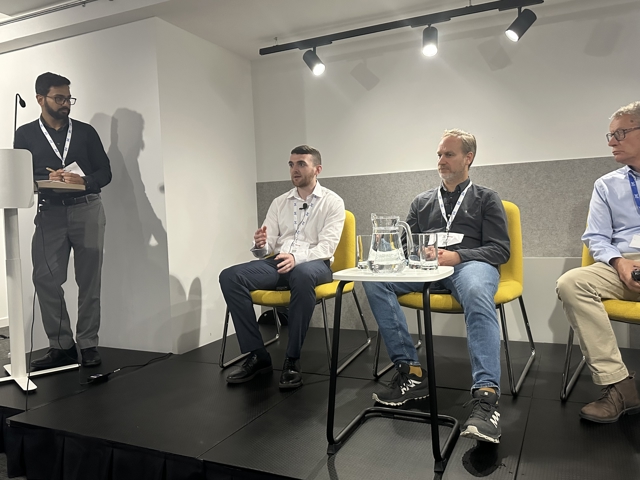
Chris Goggin, Director of Operations at Rinnai, delivered the sponsor welcome, underlining the need for robust design, installation and operational practices to ensure that heat pump systems achieve their intended performance outcomes.
Attendees then heard from a panel of expert speakers who shared technical insights and practical experience from across the industry.
Rich Cartwright, Founder and CTO of Heat Engineer Software Ltd, explored how digital tools and accurate system modelling can support better design decisions and improve operational performance. His presentation highlighted the importance of data-driven approaches in helping engineers optimise heat pump systems and achieve greater efficiency.
Sean Ehlen, Technical Design Engineer at Rinnai UK Ltd, discussed key considerations in heat pump specification and system design, examining how careful planning and integration can help bridge the gap between theoretical performance and real-world operation.
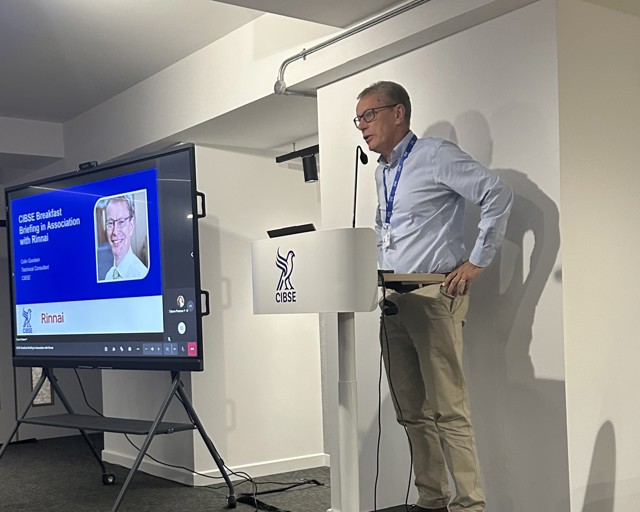
Colin Goodwin, Technical Consultant at CIBSE, provided additional industry perspective, focusing on best practice guidance and the role of performance verification in ensuring heating systems deliver expected outcomes throughout their lifecycle.
Throughout the morning, speakers emphasised the importance of considering the entire project journey, from initial design through to installation, commissioning, operation and maintenance. Discussions highlighted that achieving successful heat pump performance requires close collaboration between designers, manufacturers, contractors, facilities teams and building operators.
The event also provided attendees with an opportunity to network with peers and engage directly with speakers, fostering valuable discussions around the practical challenges facing the industry as it continues to accelerate the deployment of low-carbon heating technologies.
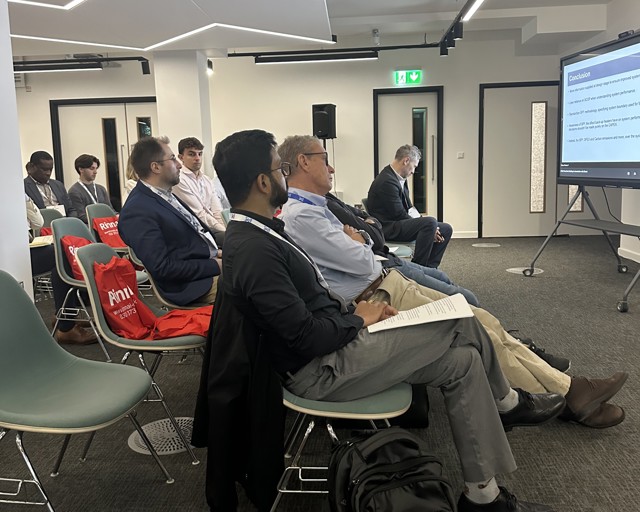
CIBSE would like to thank Rinnai for its support of the Breakfast Briefing and all speakers and attendees for contributing to an engaging and informative discussion.
As the industry continues its transition towards net zero, events such as these play an important role in sharing knowledge, promoting best practice and helping ensure that heat pump systems deliver the performance needed to support a more sustainable built environment.