
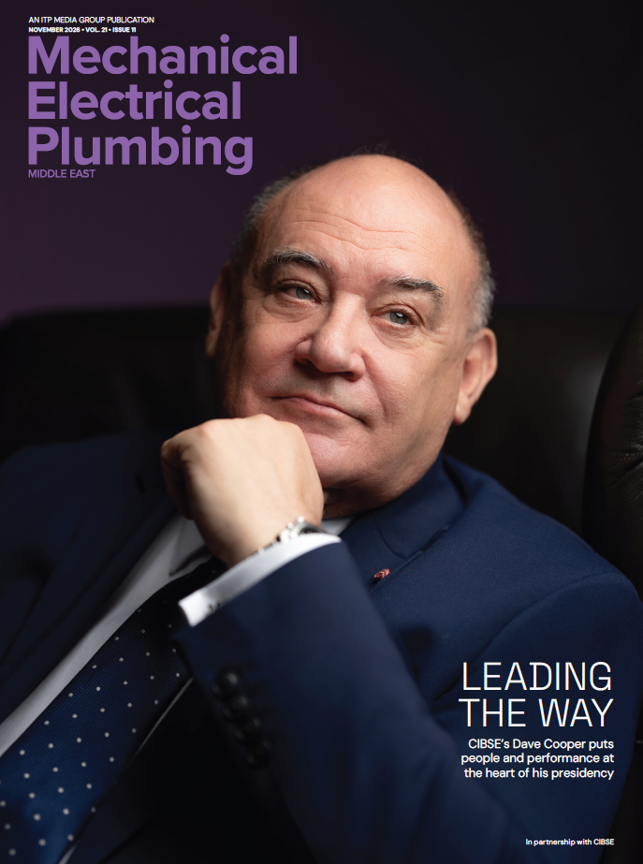
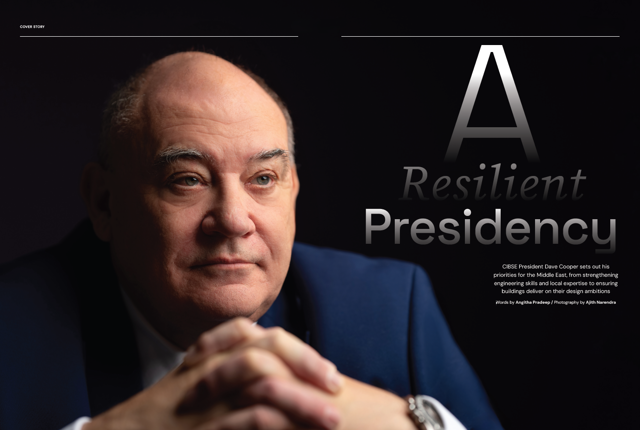
For CIBSE's 2026–2027 President, Dave Cooper, the real test of sustainable building design comes after handover – when buildings are occupied, systems are operating and actual performance can be measured.
In his cover interview for MEP Middle East, Dave discusses his presidential theme, Future-Proofing through Resilience, and what it means for building services engineers working across a region facing increasingly demanding climate conditions, rapid urban development and evolving expectations around building performance.
At the heart of his message is the need to move beyond design aspirations and focus on how buildings perform throughout their operational lives. While ambitious sustainability targets and efficient designs are important, they must be supported by effective commissioning, properly configured controls, competent operational teams and ongoing performance monitoring.
Dave highlights the persistent gap between design intent and real-world building performance, emphasising the importance of establishing clear performance targets from the outset, ensuring accountability, strengthening handover processes and embedding post-occupancy evaluation, seasonal commissioning and continuous optimisation into building management.
Building resilience for a changing climate
His presidential theme, Future-Proofing through Resilience, places the ability of buildings and infrastructure to adapt and perform over time at the centre of the industry's priorities.
Across the MENA region, this means addressing the challenges of extreme heat, humidity, dust, water scarcity and increasing energy demand, while maintaining healthy and comfortable indoor environments and reducing carbon emissions.
Dave underlines the importance of treating decarbonisation and climate resilience as interconnected priorities. Cooling, in particular, remains fundamental to health, comfort and productivity across the region. He advocates a fabric-first approach, reducing cooling demand through effective building orientation, shading and solar control before meeting remaining demand through efficient equipment and intelligent controls. Ventilation and humidity management must also be considered alongside cooling to ensure that energy efficiency does not come at the expense of indoor environmental quality.
The interview also explores the significant opportunity presented by retrofitting existing buildings. Targeted improvements to building controls, plant, distribution systems and operational practices can deliver meaningful energy savings, improve comfort, extend asset lifespans and protect property value. However, these interventions must be supported by reliable data, clear performance baselines, whole-life cost assessments and verified results.
Strengthening CIBSE's presence across MENA
The interview also highlights CIBSE's commitment to strengthening its regional engagement and supporting the development of building services engineering expertise across the Middle East.
New sub-committees in Saudi Arabia and Oman are intended to give local engineers a stronger voice within the Institution and ensure that its guidance and activities reflect the specific challenges and opportunities of their markets.
While international standards provide an essential technical foundation, Dave emphasises the importance of applying them in ways that reflect local conditions, regulations, supply chains and operating practices.
As part of this approach, CIBSE is developing region-specific guidance covering areas including water management, irrigation and high-grade hot-water systems, complementing existing regulations and international standards with practical, experience-led knowledge.
Investing in skills, competence and inclusion
Beyond technology and technical guidance, Dave identifies engineering competence as one of the most important enablers of long-term progress.
As buildings become increasingly sophisticated and reliant on data-driven systems, the industry needs professionals with the knowledge and practical experience to interpret information, make informed decisions and ensure that technology delivers meaningful improvements.
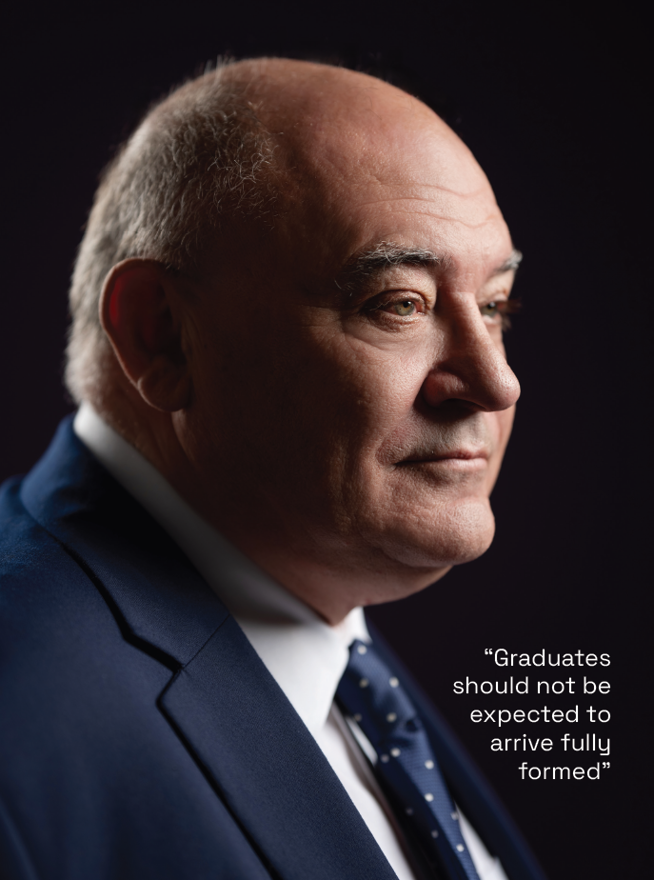
He highlights the importance of mentoring, continuing professional development, professional registration and employer-supported learning in developing the next generation of building services engineers.
CIBSE's student initiatives also play an important role in connecting academic knowledge with the practical realities of engineering projects. The 2026 Student Design Competition, for example, challenged participants to develop engineering solutions for net-zero districts by 2050, bringing together considerations including energy, water, mobility, carbon and wellbeing.
The Institution's commitment to broadening the profession's talent pipeline is also reflected in initiatives such as its Women in Building Services Engineering network, which supports mentoring, professional connections and greater visibility for women across the industry.
Measuring success through real-world impact
For Dave, the industry's progress should ultimately be judged by evidence rather than ambition alone.
Buildings and engineering projects must demonstrate measurable improvements in energy consumption, carbon emissions, indoor environmental quality, operational performance and resilience. CIBSE's technical activities, events and awards provide opportunities to recognise successful approaches while sharing practical lessons that can be applied across the wider profession.
His message is clear: creating a sustainable built environment requires more than designing efficient buildings. It means ensuring that they are properly commissioned, effectively operated, continuously optimised and capable of adapting to changing demands throughout their working lives.
Through his presidency, Dave is encouraging the building services industry to place resilience, accountability and measurable performance at the heart of its approach to future-proofing the built environment.
Read the full cover interview with 2026-27 CIBSE President Dave Cooper in MEP Middle East HERE