
Without major capital investment or replacement of its gas-fired heating system, Aurora improved its NABERS UK Energy for Offices Base Building rating from 3.32-stars to sustained scores above 4.4-stars. This project and long term engagement demonstrates how energy tracking, controls optimisation and collaborative building management can unlock the latent performance of existing assets.
For owners seeking to improve the performance of existing offices, major retrofit can appear to be the inevitable starting point. Using NABERS UK as their performance benchmark, Royal London Asset Management posed a different question: how far could a modern, gas-heated building improve through optimisation alone before significant capital intervention was required?
State of play:
Aurora is a modern 9,000 m2 office building based in Bristol constructed in 2018 and received its first NABERS UK rating of 3 stars in autumn 2024. The property relies on gas-fired space heating and DHW systems and was initially audited by BIP.Verco as part of a wider net zero audit programme for Royal London Asset Management.
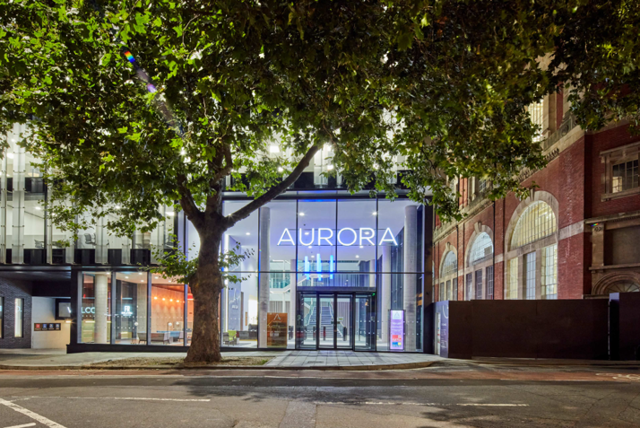
Figure 1 - Aurora Building, Bristol
Thanks in part to Aurora’s advanced BMS system, the audit identified a wide range of optimisation opportunities and, crucially, highlighted a gap between its current performance and its full technical potential. When Aurora received an archetypical 3-star rating in autumn 2024, Royal London Asset Management commissioned a NABERS UK focussed energy tracking and optimisation programme with the aim of closing the performance gap, reducing building emissions, improving building control and stretching the NABERS UK rating.
Reaching for the stars:
NABERS UK rates a buildings actual, metered performance over a 12-month period against comparable assets, on a scale of 0 to 6 stars, with 6 stars representing the UK’s best performing, most sustainable buildings, and 3 stars representing a typical building. The team established a four-star rating as the target, with 4.5-stars as a stretch target. The NABERS UK target was dissected into system level energy budgets, allowing actual consumption of building end-uses to be tracked against their required performance. Monthly energy tracking was then used to examine the performance and flag issues to the facilities team during regular meetings.
In action:
Initial work progressed through close collaboration between BIP.Verco and the JLL Sustainable Operations and Asset Experience teams, with both parties working together to implement the optimisation measures identified by the original deep dive audit. Plant run times were reduced by aligning tenant schedules with occupancy, heating and cooling deadbands were widened, and a temperature hold-off was introduced to the boilers and chillers. Changes were made alongside careful monitoring of tenant comfort.
A large energy saving measure was found to be a minimum-demand threshold for heating and cooling. This minimum threshold prevented the central plant from running both during periods of minimal demand, and in the event of a fault whereby an FCU incorrectly calls for heat or coolth, activating the entire central plant system.
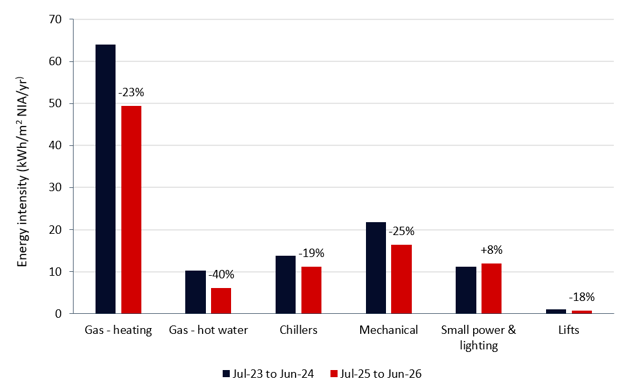
Figure 2 - Annual consumption of base building end-use breakdowns before and after the programme.
Alognside the implementation of these measures, an AI-enabled optimisation platform was trialled for approximately 6 months between April and October 2025 to support optimum start-stop times, demand-based control, and maintain current building performance with enhanced fault detection. The system worked effectively and upon its removal in October 2025 there was a short period of elevated consumption whilst the team restored BMS controls back to optimal functional order.
Finding the comfort zone:
As a result of the cold period in December and January 2025, some of the more ascetic energy saving measures were adjusted after tenant engagement, including the minimum heating setpoint being pushed up to 21°C. Plant run times were also pushed back, allowing for a longer building conditioning period in the mornings.
These changes were under regular review, with both energy consumption and tenant comfort closely monitored. During the cold winter period, the decision was made to prioritise occupant comfort by adjusting heating setpoints and extending conditioning periods. While this resulted in increased gas consumption in January and February 2026, the building maintained its strong 4-star performance, demonstrating that optimisation had been successful within the boundaries of tenant wellbeing.
This outcome aligned with Royal London Asset Management's expectations, as the programme needed to deliver not just energy reductions, but improved building control and sustained comfortable conditions for occupants. The ability to balance performance targets with tenant satisfaction while maintaining a 4-star rating validated the optimisation strategy.
The end result:
Aurora’s NABERS UK journey began with a baseline rating of 3 stars (3.32 decimal rating), recorded in October 2024. Following the initial 12-month M&V programme the asset was re-rated and achieved 4-stars (4.42 decimal rating) in July 2025, thanks to the implementation of multiple optimisation measures, regular energy tracking, and the introduction of an AI-enabled optimisation platform. This showed an effective proof of concept, a 1.1-star improvement through optimisation alone.
A further 12-month M&V programme resulted in a sustained 4-star rating, with a slight uptick to 4.43, demonstrating that the asset is able to maintain the NABERS UK performance. The tenant engagement throughout the programme, particularly during the winter of 2025 was a helpful signpost that the buildings space heating, which is the largest consumer of energy, had been fully optimised within the limits of tenant comfort.
The case study is a wider success story for NABERS UK, demonstrating how the star system can act as a singular visible and tangible catalyst to drive building performance improvement, independent of capital cycles. Setting star targets was able to engage various stakeholders to act rapidly and effectively to ensure energy reduction was targeted, monitored, and maintained. For Royal London Asset Management, the NABERS star became their guiding star towards ideal operational building performance.